
Tree Felling in Wagga Wagga
Local, fully qualified tree specialists delivering safe, efficient removals, pruning and emergency response with modern equipment and clear communication.
25+
Years Experience
24/7
Emergency Response
1999
Established Year
Clean Worksites
Safety First
Complete Tree Care
Site Protection
Safe, Controlled Tree Felling
When a tree becomes too large, too unstable or simply sits in the wrong place, the biggest challenge is getting it down safely without damaging nearby structures, gardens or access points. That’s why at Riverina Tree Fellas in Wagga Wagga, we focus on tree felling that’s carefully planned from the very first inspection.
Instead of rushing the job, we look at the lean of the tree, the weight of individual sections, wind patterns, ground conditions and any hazards that might influence where and how the tree will fall. This precision-driven approach is especially important for tall gums, trees growing close to homes or any tree that has become unpredictable after storm damage or disease. The goal is to give you peace of mind by bringing the tree down exactly where it needs to go—no guesswork, no unnecessary risk.
A well-executed tree fell protects your property while preventing future hazards from unstable or overextended branches. If you need a safe, efficient way to remove a problem tree, call 0422 087 573.
Frequently Asked Questions
How do professionals decide which direction a tree will fall?
Tree fall direction is determined by combining several factors: natural lean, weight distribution throughout the canopy, internal trunk condition, root stability and any external forces like wind or slope. Before cutting begins, the fall zone is mapped out to calculate the safest direction. This includes identifying escape paths, clearing obstacles and predicting how branches might interact with nearby structures.
When the tree’s natural lean isn’t safe, techniques such as strategic cuts, wedges or ropes may be used to influence the fall and increase control. The entire process is designed to minimise risk and ensure the tree lands exactly where planned.
What’s the difference between tree felling and tree removal?
Tree felling refers specifically to bringing a tree down in one controlled motion, usually when there is enough space to do so safely. Tree removal, on the other hand, often involves dismantling the tree in sections, especially when structures, fences, gardens or tight areas limit available space.
Felling is generally faster and more efficient when conditions allow, while sectional removal prioritises safety and precision in confined environments. Both methods are valid, and the choice between them depends on the property layout, the tree’s size, its health and any surrounding hazards.
Can a leaning tree be safely felled?
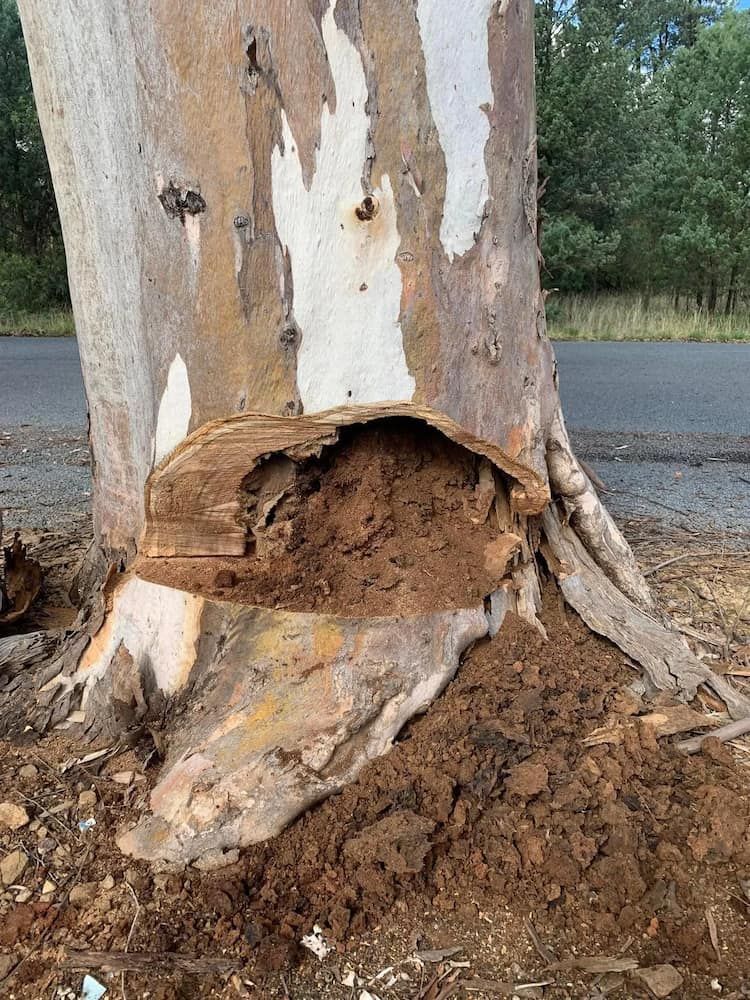
A leaning tree can often be safely felled, but the degree and direction of the lean must be assessed carefully. A mild lean may simply influence the chosen fall direction, while a severe or sudden lean—especially after storms or heavy rain—can indicate compromised roots or internal structural weakness. These conditions make felling more complex, as the tree may behave unpredictably under pressure.
To manage this, additional supports, bracing methods or sectional dismantling may be used to reduce instability before the main cut is made. Proper evaluation ensures the safest approach and helps prevent unexpected failure during the fall.
Enquire Now
Thank you for contacting Riverina Tree Fellas.
We will get back to you as soon as possible.
Oops, there was an error sending your message.
Please try again later.
Thoughtful Planning That Protects Your Property
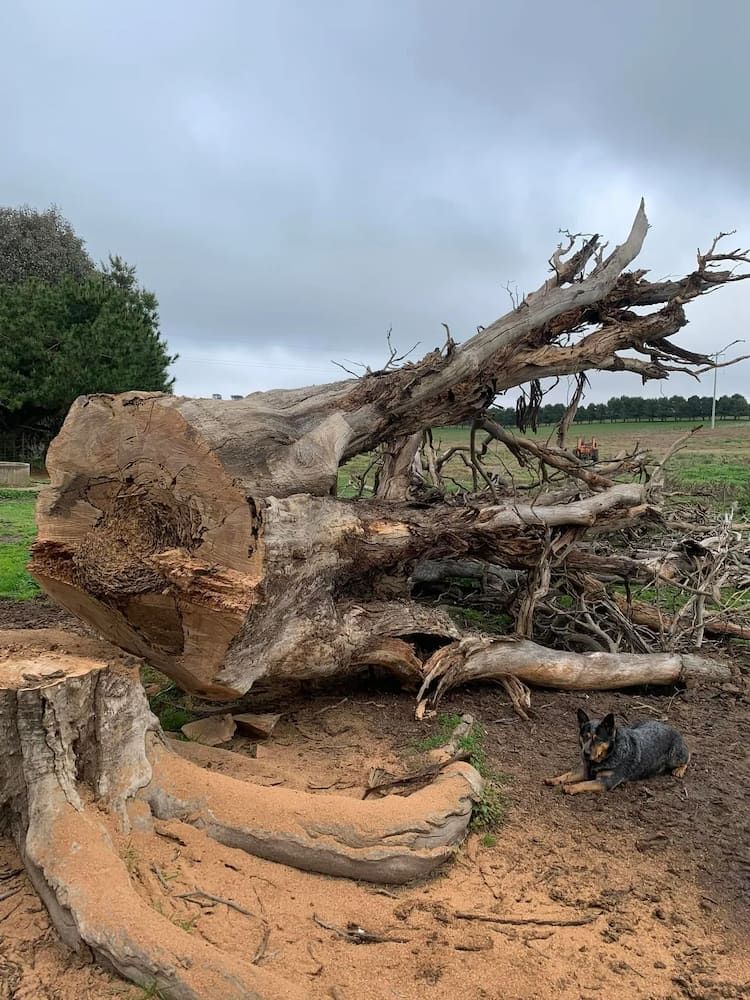
Effective tree felling is never just about cutting the trunk. It’s about understanding how the tree behaves and how its surroundings might influence the fall. Factors like root stability, decay within the trunk, sloping ground, fencing, sheds and even underground infrastructure can change the way a tree reacts under pressure.
By looking beyond the obvious, it becomes possible to guide the fall in a predictable direction while reducing shock, breakage and debris spread. This level of preparation makes felling safer, especially for trees that have grown too large for their space, are pushing into yards or driveways or have begun leaning after years of uneven growth. The right technique also helps avoid damage to lawns, gardens and neighbouring properties; something that matters when space is tight or access is limited.
Safe, considered tree felling keeps your outdoor spaces secure and removes risks before they become emergencies.