
24/7 Emergency Tree Removal in Wagga Wagga
Local, fully qualified tree specialists delivering safe, efficient removals, pruning and emergency response with modern equipment and clear communication.
25+
Years Experience
24/7
Emergency Response
1999
Established Year
Clean Worksites
Safety First
Complete Tree Care
Site Protection
Fast, Safe Help
Storms, high winds and sudden structural failures don’t wait for business hours, and when a tree starts leaning, splitting or falling, you need help immediately—not tomorrow. That’s why Riverina Tree Fellas in Wagga Wagga provides 24/7 emergency tree removal designed to restore safety quickly and prevent further damage to your home, vehicles, fences or outdoor areas.
Emergency situations are unpredictable, and the biggest challenge is that unstable trees behave differently under pressure—branches can snap without warning, roots can shift suddenly and compromised trunks may collapse in seconds. Having an experienced team respond with the right equipment and a clear plan makes all the difference in protecting people and property during chaotic conditions.
When a tree becomes a hazard, acting fast prevents more serious issues and gives you peace of mind. For immediate, reliable emergency assistance, call 0422 087 573 any time of day or night.
Frequently Asked Questions
When should a tree be considered an emergency risk?
A tree becomes an emergency risk when it threatens immediate damage or injury. Signs include sudden leaning, cracked or splitting trunks, large limbs hanging loosely, roots lifting from the ground or visible movement during mild wind. After storms, even trees that appear stable may have internal damage or compromised roots, making them more likely to fail.
Trees that fall onto structures, block driveways or collapse onto fences also require urgent attention to ensure the area is safe. In addition, any tree tangled with powerlines or impacting access to your property should be treated as an emergency.
Is emergency tree removal safe to perform at night or during storms?
Emergency removals can be performed at night, but safety is always the priority. Low visibility, slippery surfaces, strong winds and unstable branches all increase risk, so professionals often stabilise the area first before beginning full removal. In some cases—such as active storms, lightning or dangerously high winds—removal may be paused until conditions are safe enough to proceed without increasing danger.
Temporary measures like securing loose limbs, blocking off unsafe zones or partial dismantling may be used until a full removal is possible. Once conditions allow, the complete removal is carried out using proper lighting, equipment and controlled techniques.
What should be done before help arrives during a tree emergency?
Before help arrives, the most important step is to stay clear of the affected area. Avoid walking under damaged branches, leaning trunks or any tree entangled in powerlines, and keep children and pets well away. If a tree has fallen on the home, do not attempt to move or cut it yourself, as pressure points can shift suddenly.
Document any visible damage for insurance purposes, turn off outdoor power if safe to do so, and ensure there is clear access for emergency crews. Avoid attempting clean-up, as unstable trees may continue to move or collapse unexpectedly.
Enquire Now
Thank you for contacting Riverina Tree Fellas.
We will get back to you as soon as possible.
Oops, there was an error sending your message.
Please try again later.
Restoring Safety with 24/7 Response
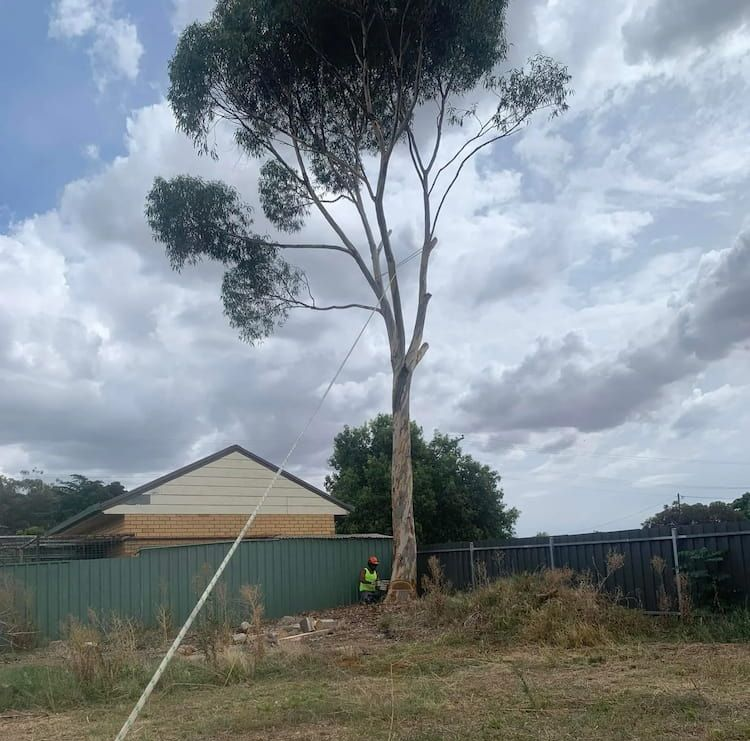
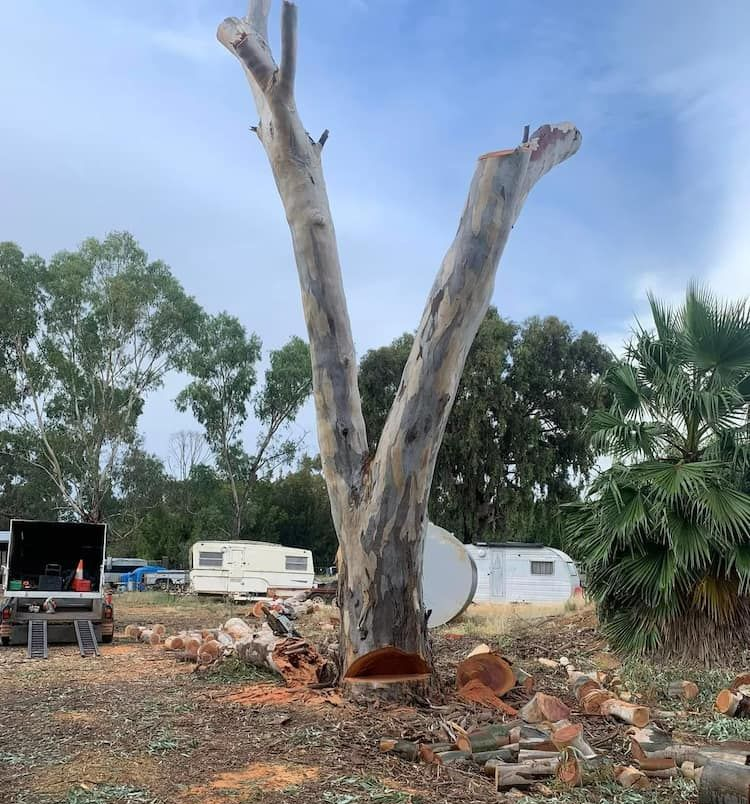
Emergency tree removal requires a completely different approach compared to standard removals. Instead of evaluating a stable tree, you’re dealing with one that might already be cracked, hanging, uprooted or tangled in powerlines. Conditions may change quickly, especially after storm damage, so each step must be calculated and controlled to avoid making the situation worse.
Efficient emergency work involves securing the area, identifying immediate threats and removing the tree—or the most dangerous sections—before they can cause further destruction. Whether it’s a fallen gum blocking a driveway, a split trunk leaning toward your home or large branches hanging overhead, the goal is always to eliminate the danger with as little disruption as possible. This rapid response protects your property, clears access and ensures the area is safe to use again.
Quick, expert action keeps emergencies from escalating into costly repairs or personal safety risks.